Introduction to Materials
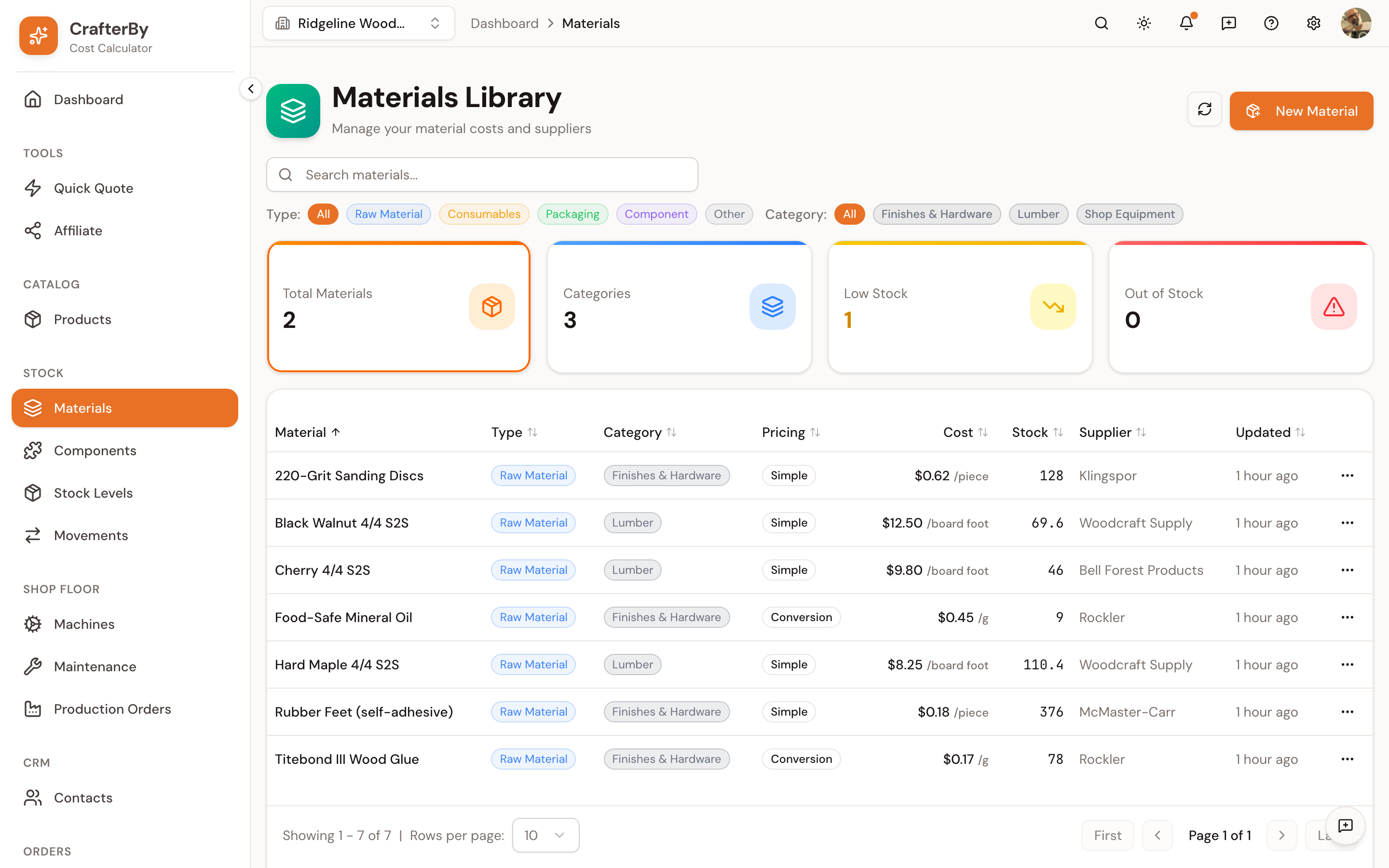
A material is anything you buy and consume to make your products — timber, filament, silver sheet, wax, thread, glue. Materials are the foundation of every cost calculation: a product's material cost is simply the sum of the materials it uses, at the cost CrafterBy derives for each.
Why there are five pricing models
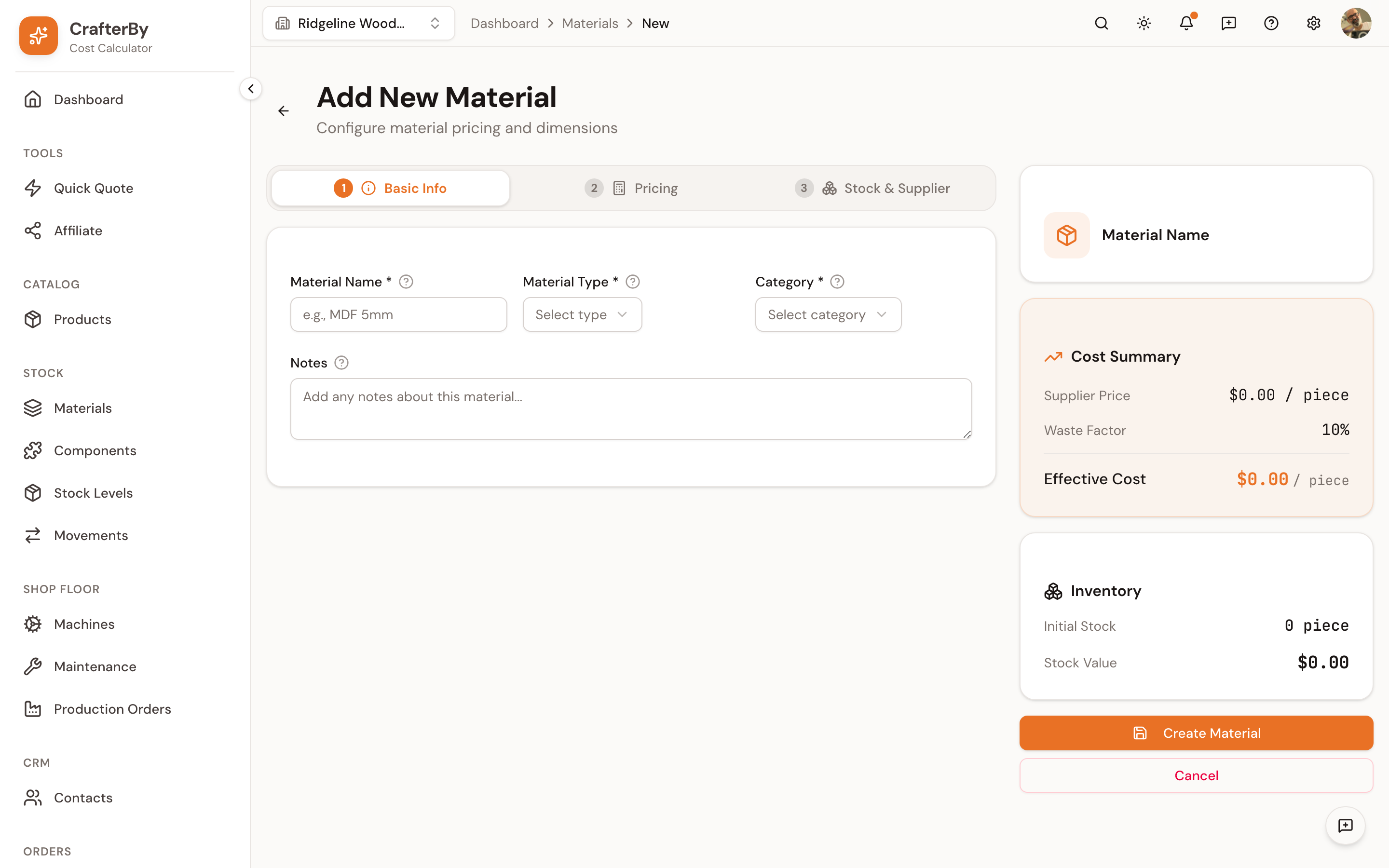
Makers do not all buy the same way. You might buy filament by the spool but use it by the gram, leather by the hide but cut it by the piece, and steel bar by weight but use it by length. A single price field cannot express all of that, so CrafterBy gives you five models and derives a usable per-unit cost from each.
| Model | You buy in | You use in | Typical material |
|---|---|---|---|
| Simple (per unit) | The unit you use | The same unit | Rubber feet, screws, buttons |
| Unit Conversion | A container | A measured amount | A 1 kg spool used by the gram |
| Sheet Material | Area | Sheets | Leather hide, plywood, acrylic |
| Dimensional | Volume | Pieces | Resin blocks, timber billets |
| Weight to Length | Weight | Length | Wire, chain, filament, bar stock |
Choosing one
- Ask how your supplier prices it — per piece, per container, per m², per m³ or per kg.
- Ask how you consume it — the same unit, or a smaller measured amount.
- If those two answers differ, you need a converting model rather than Simple.
Pick the model that matches the invoice, not the one that feels tidiest. Every model ends at the same place — a cost per working unit — so the only thing that matters is that the number you type matches what your supplier actually charged you for.
Waste applies to all five
Whatever model you choose, the waste factor is applied on top of the derived cost: effective cost = cost per working unit × (1 + waste ÷ 100). A 12% waste factor on a material costing 10.00 per unit charges products 11.20.
Comments
No comments yet. Be the first to comment!
Log in with your CrafterBy account to leave a comment.
Log in to comment