Skip to content
CrafterBy

Sign Making cost & pricing calculator

An $18.60 panel.
The finished sign?
$120 to make.

The panel is one line. Design, production and fitting are the rest of the job.

Vinyl, laminate, machines, mounting hardware and labor complete this 24×36 sign example. These are worked-example costs. CrafterBy helps you calculate yours.

Calculate my first product

Start free · Create an account, then add one product

Explore the cost example first
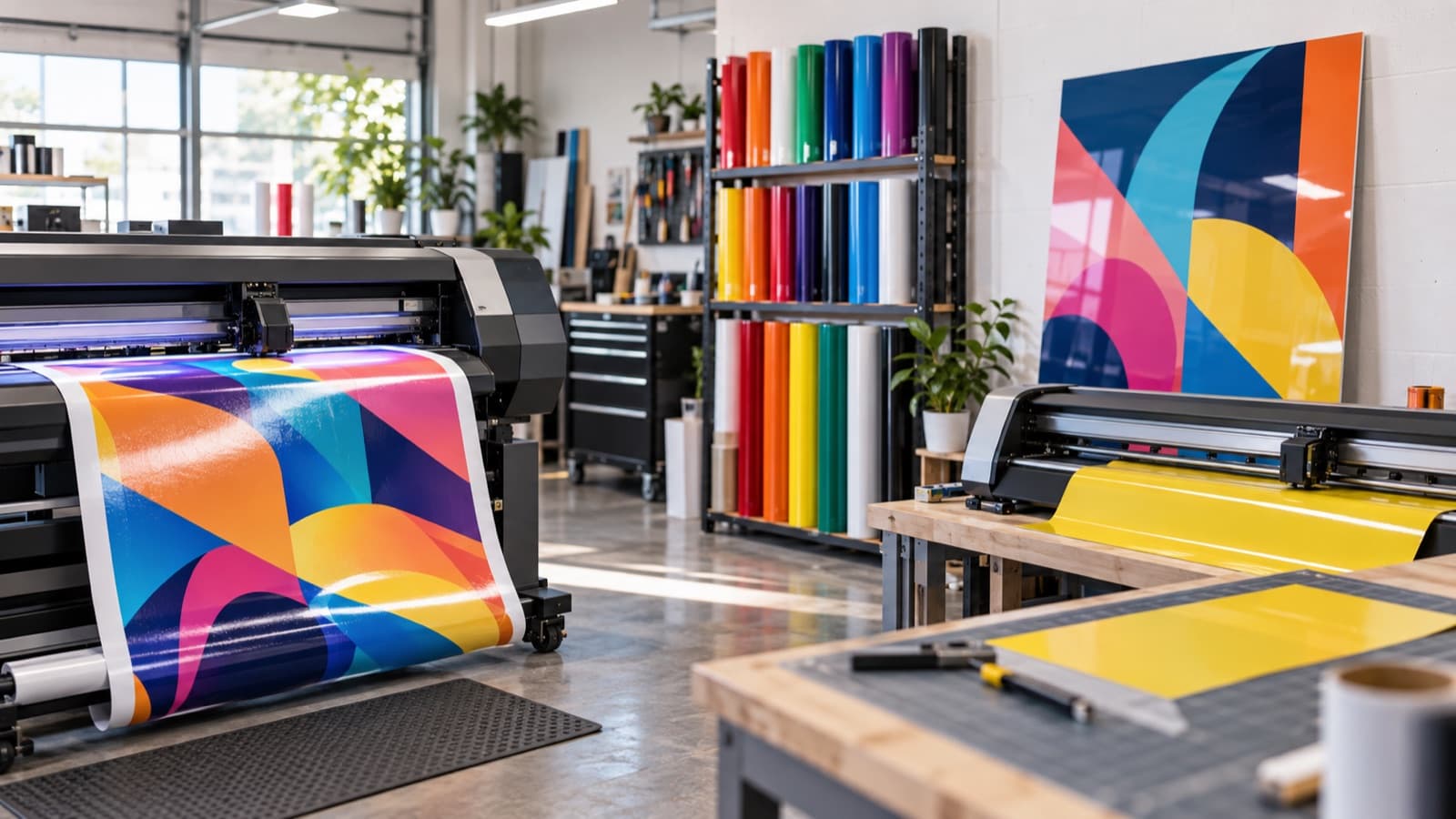
A wide-format printer and vinyl plotter producing a custom storefront sign.
Made by you.A clear message out front. A complete quote behind it.

From making it to selling it

The panel is priced. The installation is not.

It starts as a rectangle with a logo. Then the customer asks for another artwork change, the small lettering takes longer to weed, and the mounting surface needs more preparation than the photo suggested. The material estimate was right. The job became bigger around it.

A finished sign is a sequence of work: design, printing or cutting, finishing, mounting, and sometimes a trip to site. Square footage helps with the panel and film. It cannot describe every hour needed to put the result where the customer expects it. Keeping those parts visible makes the next quote easier to explain and easier to change.

01 / Follow the work behind the price

The costs are specific.
Your calculation should be, too.

Start with the parts of your process that are easiest to leave out. Give each one a place in the cost of your finished product.

01

Small letters can be a large amount of work

Two signs can use the same film area and take different amounts of weeding and application time. Fine details, multiple layers, and awkward shapes change the handling. Material area is useful, but it is only one part of the job.

Put it in your calculation

Estimate finishing from the design, not just the dimensions.
02

A printed panel is not an installed sign

Surface preparation, fixing hardware, travel, and hands-on installation need their own place in the calculation. A clean, suitable surface is work to plan for, not a free extra. Confirm what needs doing before the installation becomes a commitment.

Put it in your calculation

Separate workshop production from the agreed on-site work.

03

The offcut shelf is not a refund

A sheet layout may leave useful remnants, unusable strips, or both. Counting every offcut as a future sale can make today's material cost look artificially low. Laminate, application tape, and mounting supplies also leave stock even when the customer notices only the finished face.

Put it in your calculation

Include the material consumed and a realistic waste allowance.

02 / See what the price leaves you

One finished product.
The cost behind it.

This fictional 24×36 storefront sign costs $120.00 to produce and mount as described in the example. The panel itself is $18.60. Vinyl, laminate, machines, hardware and labor fill out the picture; travel or extra site work would need to be added.

At $225.00, there’s $105.00 left.

That’s after the costs listed in this example. Any unlisted packaging, fees and other expenses still need to come out of it. Move the price to explore the difference.

Illustrative USD example. Your costs and selling price are yours to choose.

Anatomy of a price

24×36 laminated storefront sign (ACM)

Example · USD
ACM panel, 6 sq ft
$18.60
Print vinyl + laminate, 6 sq ft
$14.40
Printer + plotter time
$9.00
Labor — design, weed, apply, mount (2 hr @ $35)
$70.00
Mounting hardware + waste
$8.00
Cost in this example
$120.00
$225.00
$60.00Explore a selling price$338.00
Left after listed costs$105.00

46.7% margin
before other expenses

A fictional worked example, not a recommended price. Include any packaging, overhead, selling fees and applicable taxes not listed here before treating the remainder as profit. Changing the price doesn’t predict demand.

Make the next decision with the numbers visible

Give the hidden work its own line

The illustrative storefront sign includes $33 of panel, vinyl, and laminate. Its complete listed cost is $120 because machine time, labor, and hardware also belong to the job. At an example selling price of $225, the $105 difference is not all take-home pay: any omitted delivery, fees, or overhead still need accounting for.

CrafterBy lets you build the product from materials, equipment time, and labor rather than one remembered price per square foot. Save the calculation, then update the size or finishing work for the next version. Keep any separate installation estimate consistent with the costs already included.

Calculate my first product

03 / Put your costs somewhere useful

Know this product’s cost.
Keep it for the next order.

CrafterBy brings materials, active labor and equipment costs into a saved product. Explore the real app below.

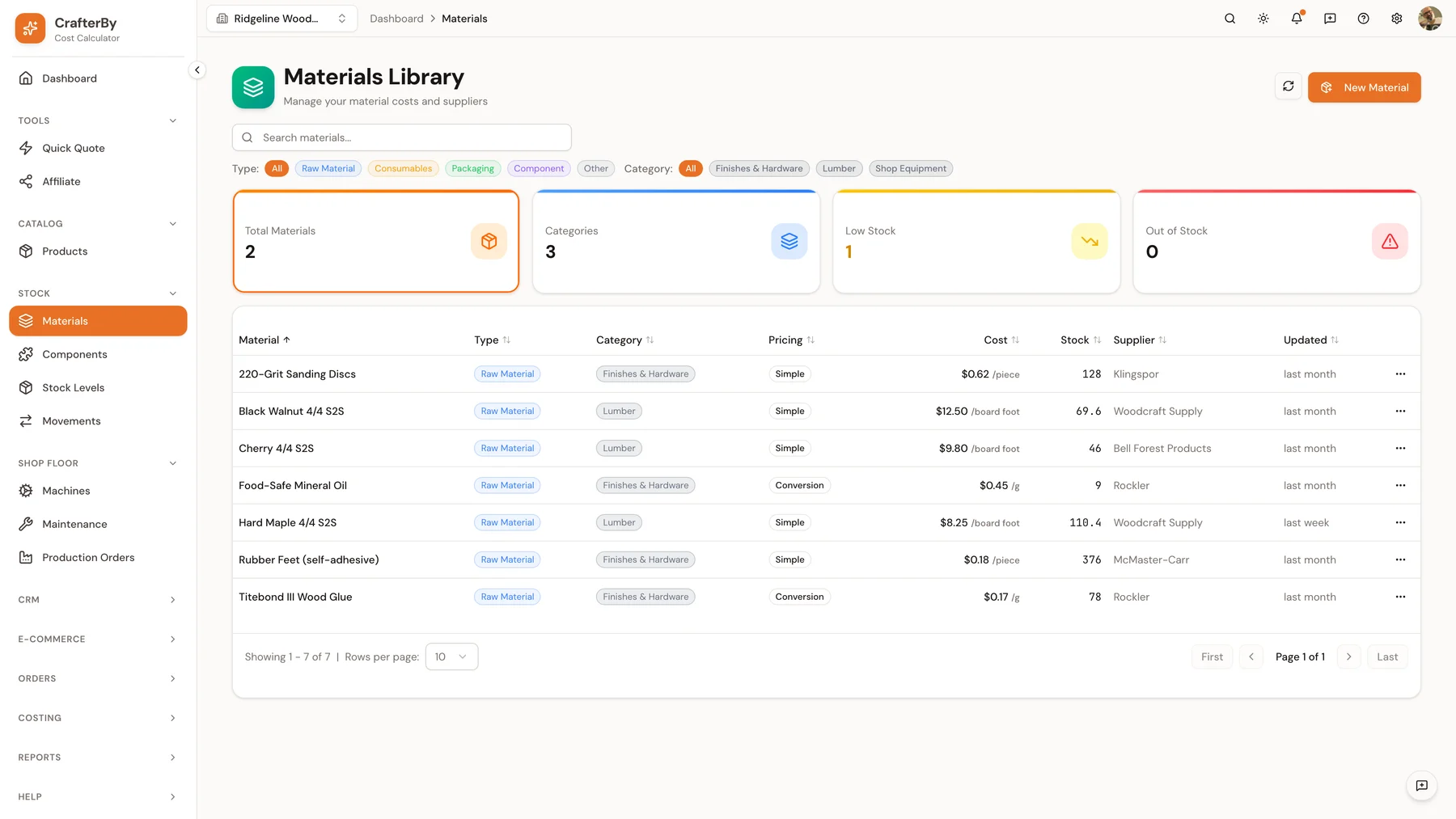
Keep vinyl, acm/aluminum, acrylic and the other materials you use in one library. Record purchase prices and units, then use them in your product costs. Real app captures below contain sample woodworking data.

Inside CrafterBy / MaterialsActual app
CrafterBy’s Materials Library with unit prices, stock levels and suppliers in a sample woodworking account.

Your materials, organized · Real captures with sample woodworking data; your work uses the same tools.

View full size
Materials

Know what you paid and what you use.

Keep purchase prices, units and waste allowances with your materials. Buying a large pack and using a small amount should be part of the calculation, not another guess.

Product templates

Reuse the work behind the quote.

Save a familiar product’s materials and process as a starting point. Review the quantity, design and active time when the next order is different.

Cost & margin

Compare a price with the costs.

See what remains after the costs you entered. You choose the price; the breakdown helps you judge the work and the order before committing to it.

Before you make the next batch or quote

“I cannot know the install time from a message.”

You do not have to pretend you can. Mark the estimate as provisional, confirm the surface and access, and decide what a site visit needs to establish before agreeing the work.

A cost calculation is a place to make assumptions visible, not permission to ignore uncertainty. Once you know the scope, replace the estimate with a better one. Your production price and your installation commitment can then describe the same job.

Your first step is small

Start with one product.
Build from what you know.

Choose one sign you installed recently. Add the panel and film, then reconstruct the preparation, finishing, travel, and fitting time.

Create your free account, add the costs you know, then explore a selling price. Replace estimates with measured numbers as you learn from your own work.

Calculate my first product

Start free. See current plans and limits.

Before you start

Questions from your craft.
Answers you can use.

Can I still quote by square foot?

Yes, as a presentation or starting rule. Check the underlying material and labor calculation for this design. A detailed layered sign can require more work than a simple panel of the same area.

What if the customer changes the artwork?

Update the time and material assumptions before accepting the change. Keep the original scope clear in your customer agreement. CrafterBy helps with costing; it does not automatically manage revision approvals or change orders.

Should delivery and installation be separate?

Separate them in your working calculation so you can see their costs. You may present one total or separate prices, but avoid charging the same travel or fitting work twice and confirm exactly what the customer is buying.

I’m only starting to sell. Is this for me?

Yes. You can begin with one product and the materials you already use. Choose one sign you installed recently. Add the panel and film, then reconstruct the preparation, finishing, travel, and fitting time. You don’t need a team or a large catalog to start understanding your costs.

Is the money left after these costs all profit?

At a $225.00 selling price, $105.00 remains after the $120.00 of costs listed in this fictional example. Any packaging, overhead, selling fees, shipping you cover or applicable taxes not listed here can reduce that amount. Include your active labor as a cost too; it is separate from the margin left afterward.

Can I try it before choosing a paid plan?

Yes. Create an account and start free with one product. Check the pricing page for current plan features and limits. You can compare the process with your existing notes or spreadsheet before deciding what you need.

Your work deserves a price you understand

Make the product.
Know what it costs.

Start with your materials, your process and your time.
Give the next price a reason behind it.

Calculate my first product

Free to start · Your costs, your price, your decision