Skip to content
CrafterBy

Sewing & Apparel cost & pricing calculator

$41.60 in fabric.
The finished dress?
$163.40 to make.

There is more in that garment than the fabric someone can see.

Linen and lining are the start. Notions, cutting waste and four hours of work complete this lined dress. These are worked-example costs. CrafterBy helps you calculate yours.

Calculate my first product

Start free · Create an account, then add one product

Explore the cost example first
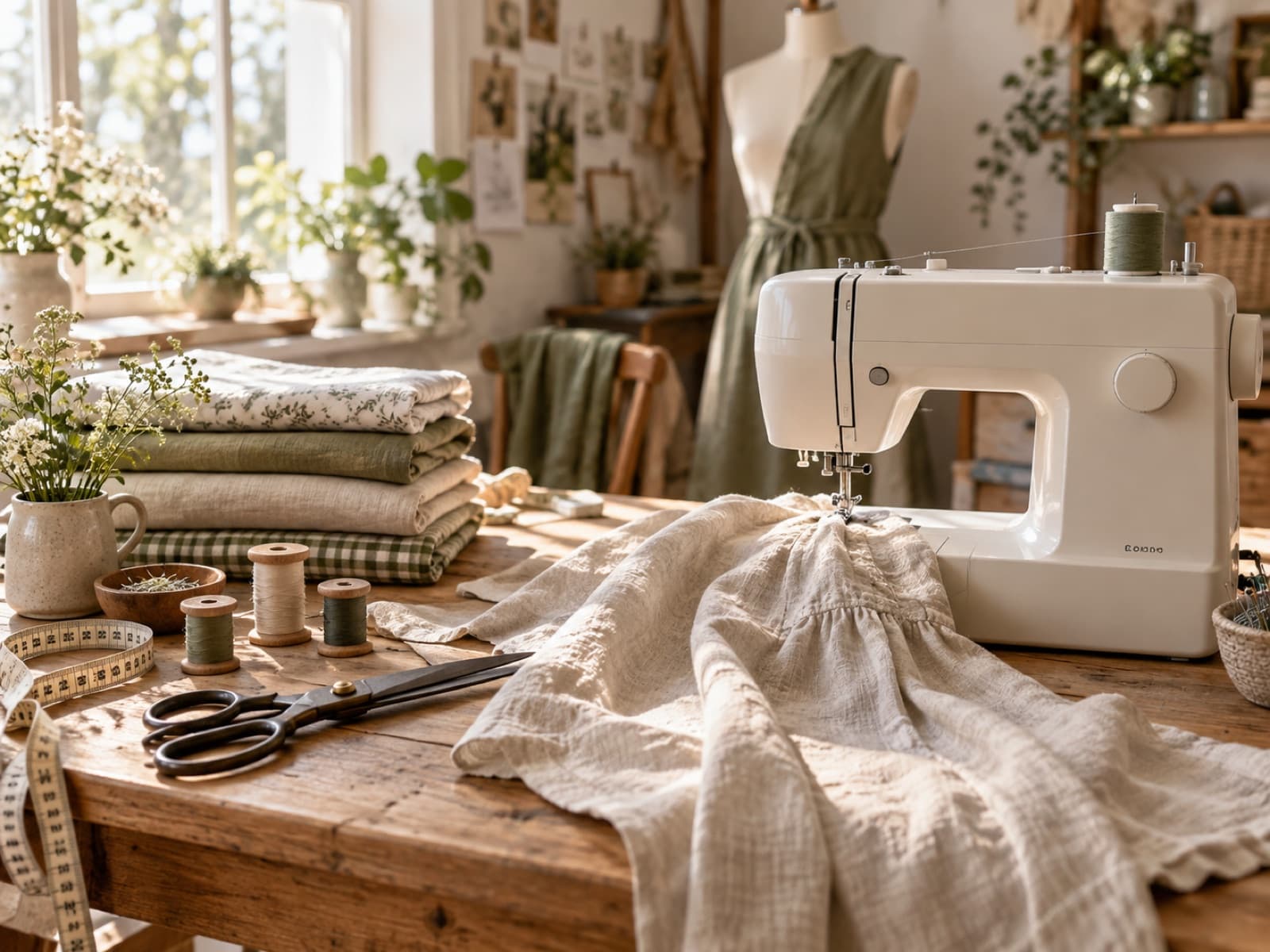
A sewing studio with fabric, a garment on a dress form, and a machine on the table.
Made by you.The outside looks effortless. You know the inside story.

From making it to selling it

The dress fits beautifully. Does the price fit the work?

The customer sees the finished dress. You remember the pattern adjustment, the careful cutting and the seam you pressed before anyone could notice it. When the quote starts with fabric yardage, those hours can become an afterthought.

Then someone asks for the same shape in another fabric. It sounds like a repeat, but the print runs one way and the lining behaves differently. The old price is a useful reference. It is not yet a calculation for this garment.

01 / Follow the work behind the price

The costs are specific.
Your calculation should be, too.

Start with the parts of your process that are easiest to leave out. Give each one a place in the cost of your finished product.

01

The pattern stays the same. The layout may not.

That one-way print needs every piece facing the right direction. A napped fabric needs the same care. Check what the layout actually uses before carrying the old fabric allowance into a new quote.

Put it in your calculation

Keep fabric price and units in your CrafterBy material library. Enter the quantity this layout consumes, with waste counted once.
02

The garment starts before the final fabric.

You sew a sample, check the fit and transfer the changes back to the pattern. If that work is part of the custom order you agreed to make, it needs a place in the quote.

Put it in your calculation

Separate one-time pattern or fitting work from construction repeated on each garment. Put the agreed labor into the cost instead of hiding it inside fabric markup.

03

The machine is only one part of your day.

Cutting, pressing, finishing, checking and packing all sit around the sewing itself. Counting only the time under the needle leaves a different product in the calculator from the one you actually deliver.

Put it in your calculation

Record the active stages for one familiar garment. Add lining, zips, interfacing and other notions as components you can reuse in saved products.

02 / See what the price leaves you

One finished product.
The cost behind it.

Our fictional lined linen dress has a making cost of $163.40, including $41.60 of linen and lining and four hours of labor. Notions and cutting waste are counted too. Custom fittings or extra design work would need their own allowance.

At $285.00, there’s $121.60 left.

That’s after the costs listed in this example. Any unlisted packaging, fees and other expenses still need to come out of it. Move the price to explore the difference.

Illustrative USD example. Your costs and selling price are yours to choose.

Anatomy of a price

Lined linen dress

Example · USD
Linen + lining, 3.2 yd
$41.60
Invisible zipper, thread, interfacing
$6.80
Cutting-waste allowance
$3.00
Labor — cut + sew + finish (4 hr @ $28)
$112.00
Cost in this example
$163.40
$285.00
$81.00Explore a selling price$428.00
Left after listed costs$121.60

42.7% margin
before other expenses

A fictional worked example, not a recommended price. Include any packaging, overhead, selling fees and applicable taxes not listed here before treating the remainder as profit. Changing the price doesn’t predict demand.

Make the next decision with the numbers visible

Let the inside story shape the quote.

The fictional lined dress on this page includes $41.60 of linen and lining, but totals $163.40 after notions, cutting waste and four hours of work. Extra fittings or original pattern development are not hidden in that number; they would need adding.

Build your own garment in CrafterBy and save the product template. For another size or fabric, review the quantities and construction time. The cost and margin tools let you compare possible prices without assuming that every variation takes the same work.

Calculate my first product

03 / Put your costs somewhere useful

Know this product’s cost.
Keep it for the next order.

CrafterBy brings materials, active labor and equipment costs into a saved product. Explore the real app below.

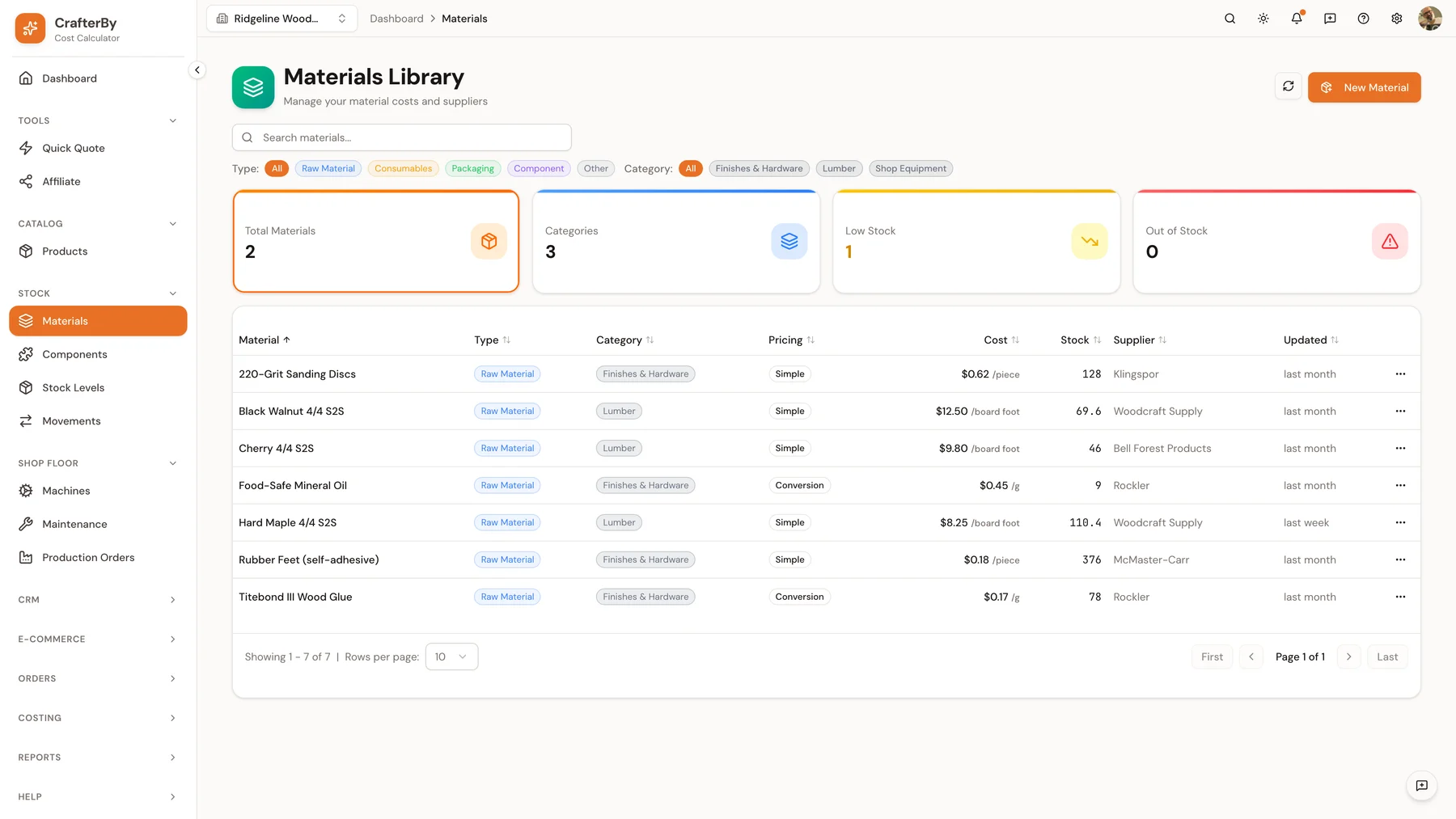
Keep fabric, thread, zippers and the other materials you use in one library. Record purchase prices and units, then use them in your product costs. Real app captures below contain sample woodworking data.

Inside CrafterBy / MaterialsActual app
CrafterBy’s Materials Library with unit prices, stock levels and suppliers in a sample woodworking account.

Your materials, organized · Real captures with sample woodworking data; your work uses the same tools.

View full size
Materials

Know what you paid and what you use.

Keep purchase prices, units and waste allowances with your materials. Buying a large pack and using a small amount should be part of the calculation, not another guess.

Product templates

Reuse the work behind the quote.

Save a familiar product’s materials and process as a starting point. Review the quantity, design and active time when the next order is different.

Cost & margin

Compare a price with the costs.

See what remains after the costs you entered. You choose the price; the breakdown helps you judge the work and the order before committing to it.

Before you make the next batch or quote

“Customers compare my work with clothes in shops.”

That comparison can make quoting difficult. A cost calculation cannot make someone value a custom garment, but it can tell you what an order asks of your materials and time before you accept it.

You can then discuss the actual scope: a simpler finish, fewer custom changes or a different fabric where appropriate. Knowing the cost makes those choices clearer without asking you to defend every stitch.

Your first step is small

Start with one product.
Build from what you know.

Choose one garment you make regularly. Add its actual fabric use, notions and active construction hours to the free calculator, then review what your usual selling price leaves.

Create your free account, add the costs you know, then explore a selling price. Replace estimates with measured numbers as you learn from your own work.

Calculate my first product

Start free. See current plans and limits.

Before you start

Questions from your craft.
Answers you can use.

Should the customer pay for every fitting experiment?

Agree on the scope before making the quote. Include the pattern and fitting work needed for that service, while keeping general learning or unrelated experiments separate. The calculator records costs; it does not define your agreement.

Can I give every size the same retail price?

Yes, if that is your choice. First check each version’s material use and labor so you understand the difference in cost. A shared selling price does not require pretending the costs are identical.

What if the customer brings the fabric?

Remove a purchase expense you do not incur, but keep the handling, cutting, notions and labor involved. Review the material and agree on the work before carrying an old quote across to it.

I’m only starting to sell. Is this for me?

Yes. You can begin with one product and the materials you already use. Choose one garment you make regularly. Add its actual fabric use, notions and active construction hours to the free calculator, then review what your usual selling price leaves. You don’t need a team or a large catalog to start understanding your costs.

Is the money left after these costs all profit?

At a $285.00 selling price, $121.60 remains after the $163.40 of costs listed in this fictional example. Any packaging, overhead, selling fees, shipping you cover or applicable taxes not listed here can reduce that amount. Include your active labor as a cost too; it is separate from the margin left afterward.

Can I try it before choosing a paid plan?

Yes. Create an account and start free with one product. Check the pricing page for current plan features and limits. You can compare the process with your existing notes or spreadsheet before deciding what you need.

Your work deserves a price you understand

Make the product.
Know what it costs.

Start with your materials, your process and your time.
Give the next price a reason behind it.

Calculate my first product

Free to start · Your costs, your price, your decision