Skip to content
CrafterBy

Metalworking cost & pricing calculator

$27 in steel.
The welded frame?
$148.50 to make.

The steel is easy to count. The grinding, gas and finishing need a line, too.

Gas, filler, discs, machine time, cut-off waste and three hours of labor complete the table frame. These are worked-example costs. CrafterBy helps you calculate yours.

Calculate my first product

Start free · Create an account, then add one product

Explore the cost example first
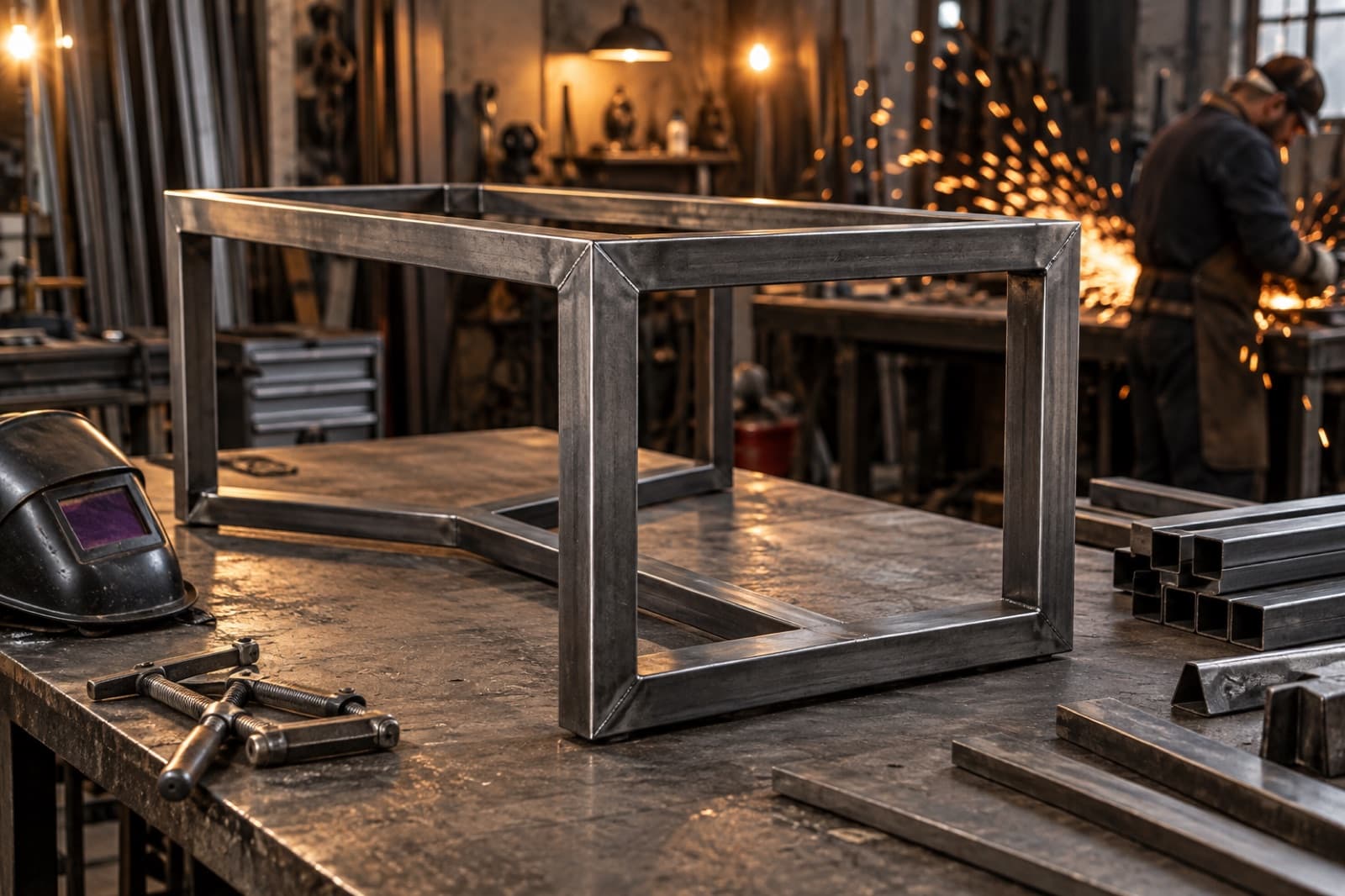
A metal fabrication shop with steel stock, sparks from a grinder, and a welded frame.
Made by you.Cut. Fit. Weld. Finish. Count the whole job.

From making it to selling it

The frame is welded. The job still has hours left in it.

A friend sees the table frame you made and asks for one. You remember what the steel cost and roughly how long you were welding. But the finished piece also includes the measuring, cutting, fitting and surface work around those welds. That is the job you are being asked to price.

Start with one build in CrafterBy. Bring stock, consumables, machine use and your working time into the same calculation. Turn the quote from a remembered steel bill into a number you can examine.

01 / Follow the work behind the price

The costs are specific.
Your calculation should be, too.

Start with the parts of your process that are easiest to leave out. Give each one a place in the cost of your finished product.

01

The arc is only part of the workday.

Fit-up, cleanup and any rework use active hours as well as welding itself. For your own small fabrication, the practical question is simple: what active work happened before and after welding? Those sessions still belong to the piece.

Put it in your calculation

Count preparation, fitting, welding, grinding and finishing labor, using the steps your project actually needs.
02

Gas and discs don’t arrive in the finished photograph.

Filler, shielding gas and cutting or grinding consumables get used along the way. The supplies you use can also affect how much cleanup the piece needs. A materials list containing only the steel misses supplies the project consumed.

Put it in your calculation

Include consumable amounts or a reasoned per-project allowance alongside your stock quantities.

03

A machine can cost money while you are earning your labor.

Saw, welder and grinder use are different from the hours you spend working. In the fictional frame example, machines contribute $12 and active labor contributes $96. They describe separate costs, even when they happen together.

Put it in your calculation

Add equipment costs and labor separately, checking what your machine rate already includes.

02 / See what the price leaves you

One finished product.
The cost behind it.

This fictional welded table frame reaches $148.50 after steel, gas, filler, discs, machine time, cut-off waste and three hours of labor. The stock is one part of the build, not a shortcut to its selling price.

At $265.00, there’s $116.50 left.

That’s after the costs listed in this example. Any unlisted packaging, fees and other expenses still need to come out of it. Move the price to explore the difference.

Illustrative USD example. Your costs and selling price are yours to choose.

Anatomy of a price

Steel table frame (welded)

Example · USD
Steel tube stock, ~9 kg
$27.00
Gas, filler rod, cut-off + flap discs
$9.50
Machine time — saw, welder, grinder (1.5 hr)
$12.00
Labor — cut, weld, grind, finish (3 hr @ $32)
$96.00
Cut-off waste allowance
$4.00
Cost in this example
$148.50
$265.00
$74.00Explore a selling price$398.00
Left after listed costs$116.50

44% margin
before other expenses

A fictional worked example, not a recommended price. Include any packaging, overhead, selling fees and applicable taxes not listed here before treating the remainder as profit. Changing the price doesn’t predict demand.

Make the next decision with the numbers visible

Make the next quote start from the last build.

A familiar frame can become a reusable product template. Keep its tube stock, supplies, machine use and working hours together. For a different size or finish, review the changed cut quantities and tasks before reusing the price.

Compare the proposed selling price with your entered cost. If the margin looks tight, you can inspect the work behind it. A quote becomes a decision about this build, rather than a hopeful multiple of the steel receipt.

Calculate my first product

03 / Put your costs somewhere useful

Know this product’s cost.
Keep it for the next order.

CrafterBy brings materials, active labor and equipment costs into a saved product. Explore the real app below.

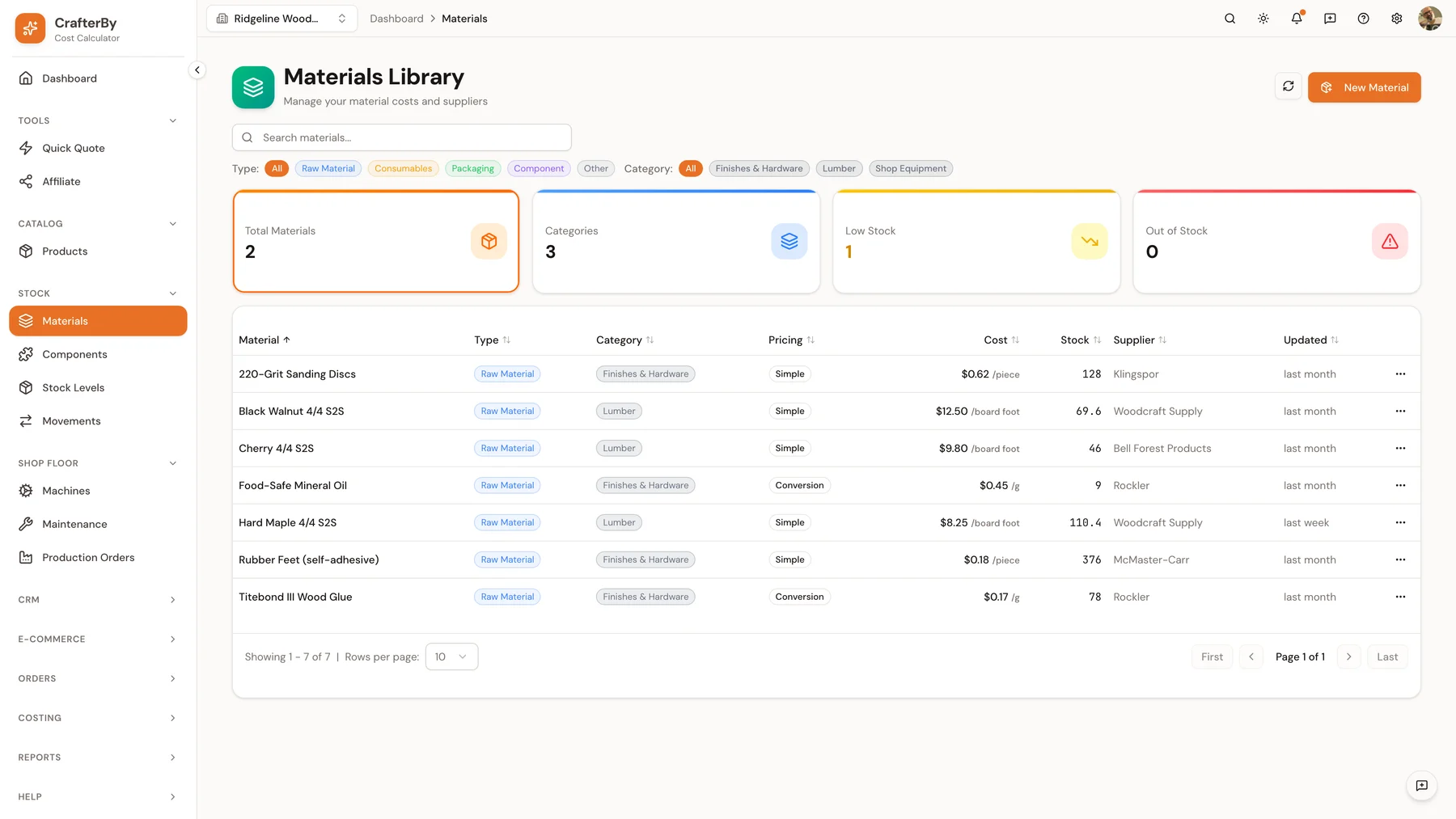
Keep steel stock, filler rod, grinding discs and the other materials you use in one library. Record purchase prices and units, then use them in your product costs. Real app captures below contain sample woodworking data.

Inside CrafterBy / MaterialsActual app
CrafterBy’s Materials Library with unit prices, stock levels and suppliers in a sample woodworking account.

Your materials, organized · Real captures with sample woodworking data; your work uses the same tools.

View full size
Materials

Know what you paid and what you use.

Keep purchase prices, units and waste allowances with your materials. Buying a large pack and using a small amount should be part of the calculation, not another guess.

Product templates

Reuse the work behind the quote.

Save a familiar product’s materials and process as a starting point. Review the quantity, design and active time when the next order is different.

Cost & margin

Compare a price with the costs.

See what remains after the costs you entered. You choose the price; the breakdown helps you judge the work and the order before committing to it.

Before you make the next batch or quote

It’s a simple frame. A detailed calculation feels excessive.

Start with the few costs that describe it: stock, consumables, equipment and your time. You don’t need to map an entire fabrication business to find out what one finished frame takes to make.

Once saved, that product is a reference for the next request. If the customer adds a different finish or another component, you have somewhere to put the change instead of quietly absorbing it in the old price.

Your first step is small

Start with one product.
Build from what you know.

Pick a completed frame, bracket set or decorative piece. Create a free account and enter the material quantities plus active preparation and finishing time. Add equipment and consumables, then examine one selling price.

Create your free account, add the costs you know, then explore a selling price. Replace estimates with measured numbers as you learn from your own work.

Calculate my first product

Start free. See current plans and limits.

Before you start

Questions from your craft.
Answers you can use.

Should I charge only for time spent welding?

Include the active work needed to deliver the piece, not only arc time. Layout, cutting, fitting, grinding and finishing can all belong in the labor entry. Use your own measurements for the job.

Do I add electricity again if my machine rate includes it?

Check what the rate represents. If power is already included, adding it again counts the same expense twice. Use a consistent equipment-cost approach and keep consumables separate where appropriate.

Does a healthy displayed margin mean the quote covers everything?

Only the costs you entered are in that comparison. Review outside finishing, packaging, delivery and selling expenses before committing. Keep those expenses visible so the comparison reflects the work you are actually quoting.

I’m only starting to sell. Is this for me?

Yes. You can begin with one product and the materials you already use. Pick a completed frame, bracket set or decorative piece. Create a free account and enter the material quantities plus active preparation and finishing time. Add equipment and consumables, then examine one selling price. You don’t need a team or a large catalog to start understanding your costs.

Is the money left after these costs all profit?

At a $265.00 selling price, $116.50 remains after the $148.50 of costs listed in this fictional example. Any packaging, overhead, selling fees, shipping you cover or applicable taxes not listed here can reduce that amount. Include your active labor as a cost too; it is separate from the margin left afterward.

Can I try it before choosing a paid plan?

Yes. Create an account and start free with one product. Check the pricing page for current plan features and limits. You can compare the process with your existing notes or spreadsheet before deciding what you need.

Your work deserves a price you understand

Make the product.
Know what it costs.

Start with your materials, your process and your time.
Give the next price a reason behind it.

Calculate my first product

Free to start · Your costs, your price, your decision