Skip to content
CrafterBy

Macramé & Fiber Arts cost & pricing calculator

$21.60 in cord.
The wall hanging?
$203.10 to make.

The cord is a material. The hours of knotting are the piece.

Hardware and seven hours of knotting at $25 an hour belong in the cost of this large macramé hanging. These are worked-example costs. CrafterBy helps you calculate yours.

Calculate my first product

Start free · Create an account, then add one product

Explore the cost example first
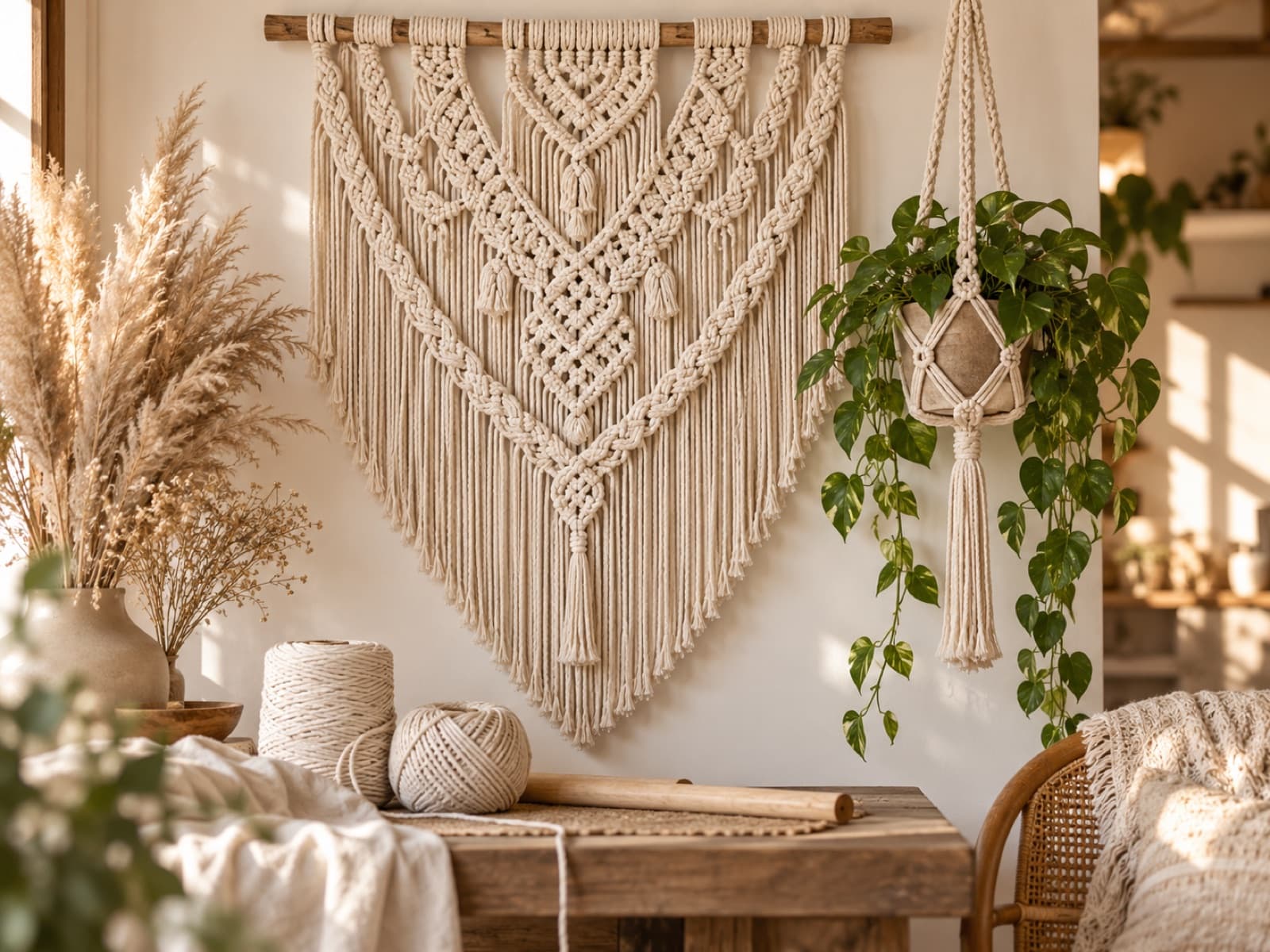
A macramé wall hanging in progress with cord, dowels, and a plant nearby.
Made by you.Made one knot at a time. Counted hour by hour.

From making it to selling it

You enjoyed making it. The seven hours still happened.

The wall hanging is ready, the fringe is trimmed and someone wants to know the price. You can remember buying the cord. The hours are harder to recall because they happened across several evenings, a few rows at a time.

That is the difficulty with work you enjoy: it can feel strange to put a number beside it. But enjoyment does not make the material last longer or give you the same evening twice. Your price needs to see the work as well as the spool.

01 / Follow the work behind the price

The costs are specific.
Your calculation should be, too.

Start with the parts of your process that are easiest to leave out. Give each one a place in the cost of your finished product.

01

A ball is a package, not a fixed length.

Two skeins can look similar and hold different lengths of yarn. Cord spools vary, too. Count the length your design consumes, so changing the yarn or cord does not quietly change the cost behind a familiar price.

Put it in your calculation

Store yarn or cord with its purchase quantity and cost in CrafterBy. Build the product from the length you actually use.
02

A different yarn can mean a different piece.

You try another yarn, check your gauge and feel how the fabric changes. Now check the quantities and time, too. A familiar pattern still needs a fresh estimate when its material, size or density changes.

Put it in your calculation

Use a saved product as a starting point, then review both length and labor when material, size or pattern changes.

03

The last details are still making.

Measuring, setting up, joining, trimming and finishing sit around the repetitive work. They can disappear when the estimate is only the hours you remember knotting, knitting or weaving.

Put it in your calculation

Record a complete active session, then total the stages across the piece. Add supports, rings, beads and packing instead of leaving them in a miscellaneous guess.

02 / See what the price leaves you

One finished product.
The cost behind it.

In this fictional large macramé wall hanging, cord and hardware join seven hours of work at a chosen $25 hourly rate. The making cost is $203.10. Your design, pace and chosen rate will give you a different number.

At $340.00, there’s $136.90 left.

That’s after the costs listed in this example. Any unlisted packaging, fees and other expenses still need to come out of it. Move the price to explore the difference.

Illustrative USD example. Your costs and selling price are yours to choose.

Anatomy of a price

Large macramé wall hanging

Example · USD
Cotton cord, ~180 m
$21.60
Dowel + hardware + beads
$6.50
Labor — knotting + finishing (7 hr @ $25)
$175.00
Cost in this example
$203.10
$340.00
$101.00Explore a selling price$510.00
Left after listed costs$136.90

40.3% margin
before other expenses

A fictional worked example, not a recommended price. Include any packaging, overhead, selling fees and applicable taxes not listed here before treating the remainder as profit. Changing the price doesn’t predict demand.

Make the next decision with the numbers visible

Put the hours beside the cord.

The fictional wall hanging here uses $21.60 of cord. With hardware and seven hours at a chosen $25 rate, the making cost reaches $203.10. The example is not a required wage or selling price. It shows why materials alone describe so little of this piece.

CrafterBy brings your chosen labor rate, actual material use and small components into the same calculation. Save the design as a template, then compare prices with the margin tools. Your pace remains yours; it simply becomes visible in the number.

Calculate my first product

03 / Put your costs somewhere useful

Know this product’s cost.
Keep it for the next order.

CrafterBy brings materials, active labor and equipment costs into a saved product. Explore the real app below.

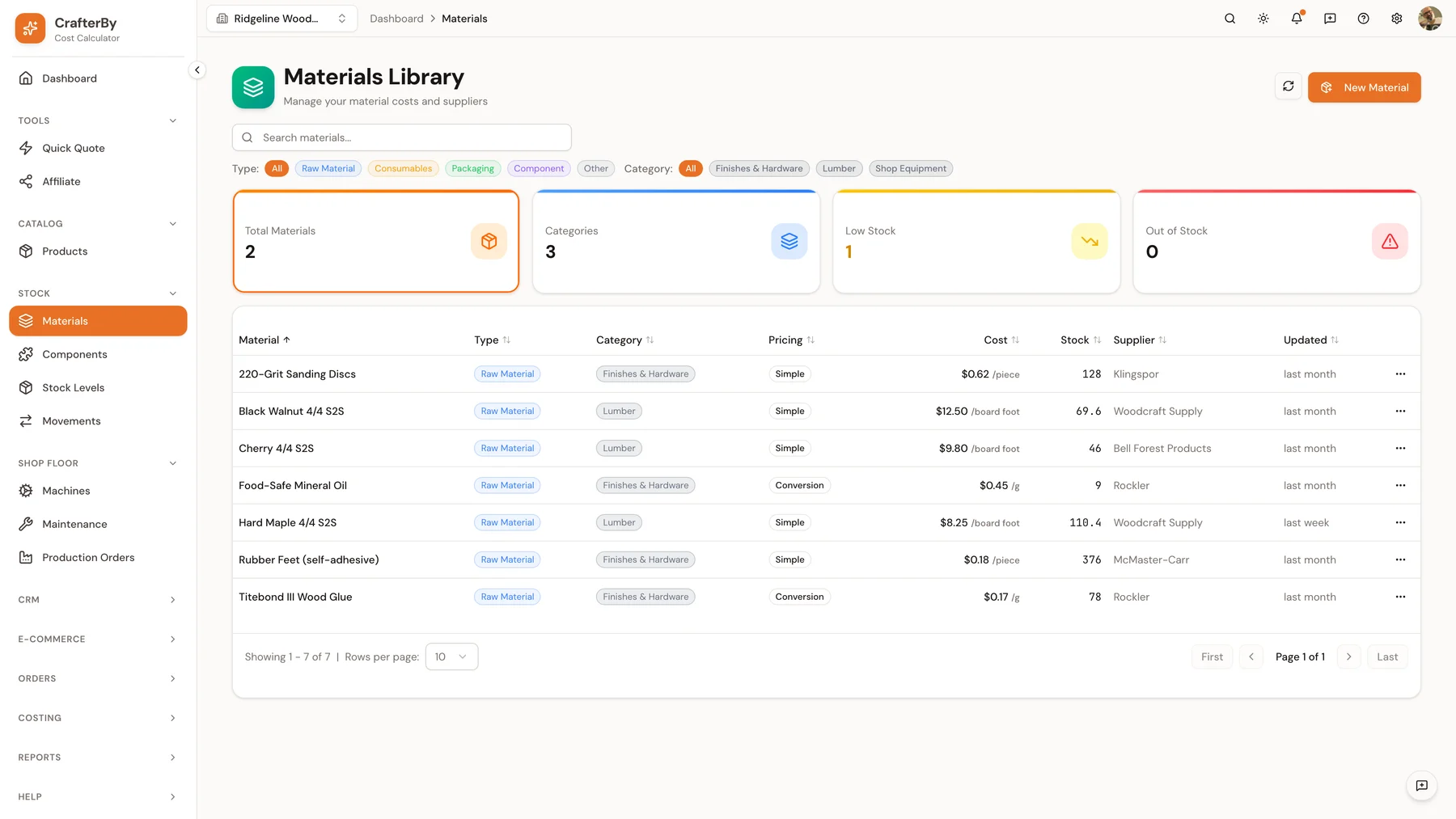
Keep macramé cord, yarn, dowels and the other materials you use in one library. Record purchase prices and units, then use them in your product costs. Real app captures below contain sample woodworking data.

Inside CrafterBy / MaterialsActual app
CrafterBy’s Materials Library with unit prices, stock levels and suppliers in a sample woodworking account.

Your materials, organized · Real captures with sample woodworking data; your work uses the same tools.

View full size
Materials

Know what you paid and what you use.

Keep purchase prices, units and waste allowances with your materials. Buying a large pack and using a small amount should be part of the calculation, not another guess.

Product templates

Reuse the work behind the quote.

Save a familiar product’s materials and process as a starting point. Review the quantity, design and active time when the next order is different.

Cost & margin

Compare a price with the costs.

See what remains after the costs you entered. You choose the price; the breakdown helps you judge the work and the order before committing to it.

Before you make the next batch or quote

“The full cost is higher than I expected.”

That can be uncomfortable, especially when you already have a familiar price. It is useful information about this design, not a verdict on your skill or a promise that customers will pay any particular amount.

You can compare sizes, patterns and the hours each one needs before deciding what to offer. A smaller piece might suit a different budget. The original can keep its careful construction, with a price decision made knowingly.

Your first step is small

Start with one product.
Build from what you know.

Bring one finished design, the length of cord or yarn it used and an honest estimate of active hours. Start in the free calculator, then refine the estimate on your next repeat.

Create your free account, add the costs you know, then explore a selling price. Replace estimates with measured numbers as you learn from your own work.

Calculate my first product

Start free. See current plans and limits.

Before you start

Questions from your craft.
Answers you can use.

Do I count hours spent making in front of the television?

Count the active making time at the rate you choose. If attention was divided, make a reasonable estimate rather than treating the whole evening as work or dismissing all of it as free.

Does a larger piece just need a proportionally higher price?

Check actual length, pattern density, finishing and hours. Dimensions alone do not describe every change in work. Use the existing template, but review its quantities instead of multiplying the old price blindly.

Should I charge one piece for a whole unused skein?

Separate the material consumed from usable stock left for another product. Include genuine waste once. Keep enough purchase information in your library to make that distinction clear when you cost the next piece.

I’m only starting to sell. Is this for me?

Yes. You can begin with one product and the materials you already use. Bring one finished design, the length of cord or yarn it used and an honest estimate of active hours. Start in the free calculator, then refine the estimate on your next repeat. You don’t need a team or a large catalog to start understanding your costs.

Is the money left after these costs all profit?

At a $340.00 selling price, $136.90 remains after the $203.10 of costs listed in this fictional example. Any packaging, overhead, selling fees, shipping you cover or applicable taxes not listed here can reduce that amount. Include your active labor as a cost too; it is separate from the margin left afterward.

Can I try it before choosing a paid plan?

Yes. Create an account and start free with one product. Check the pricing page for current plan features and limits. You can compare the process with your existing notes or spreadsheet before deciding what you need.

Your work deserves a price you understand

Make the product.
Know what it costs.

Start with your materials, your process and your time.
Give the next price a reason behind it.

Calculate my first product

Free to start · Your costs, your price, your decision