Skip to content
CrafterBy

Embroidery cost & pricing calculator

A $4.20 blank cap.
Ready to sell?
$11.50 to make.

The machine runs the design. You make the whole job happen.

Thread, stabilizer, machine time, handling and digitizing shared across 24 caps complete this example. These are worked-example costs. CrafterBy helps you calculate yours.

Calculate my first product

Start free · Create an account, then add one product

Explore the cost example first
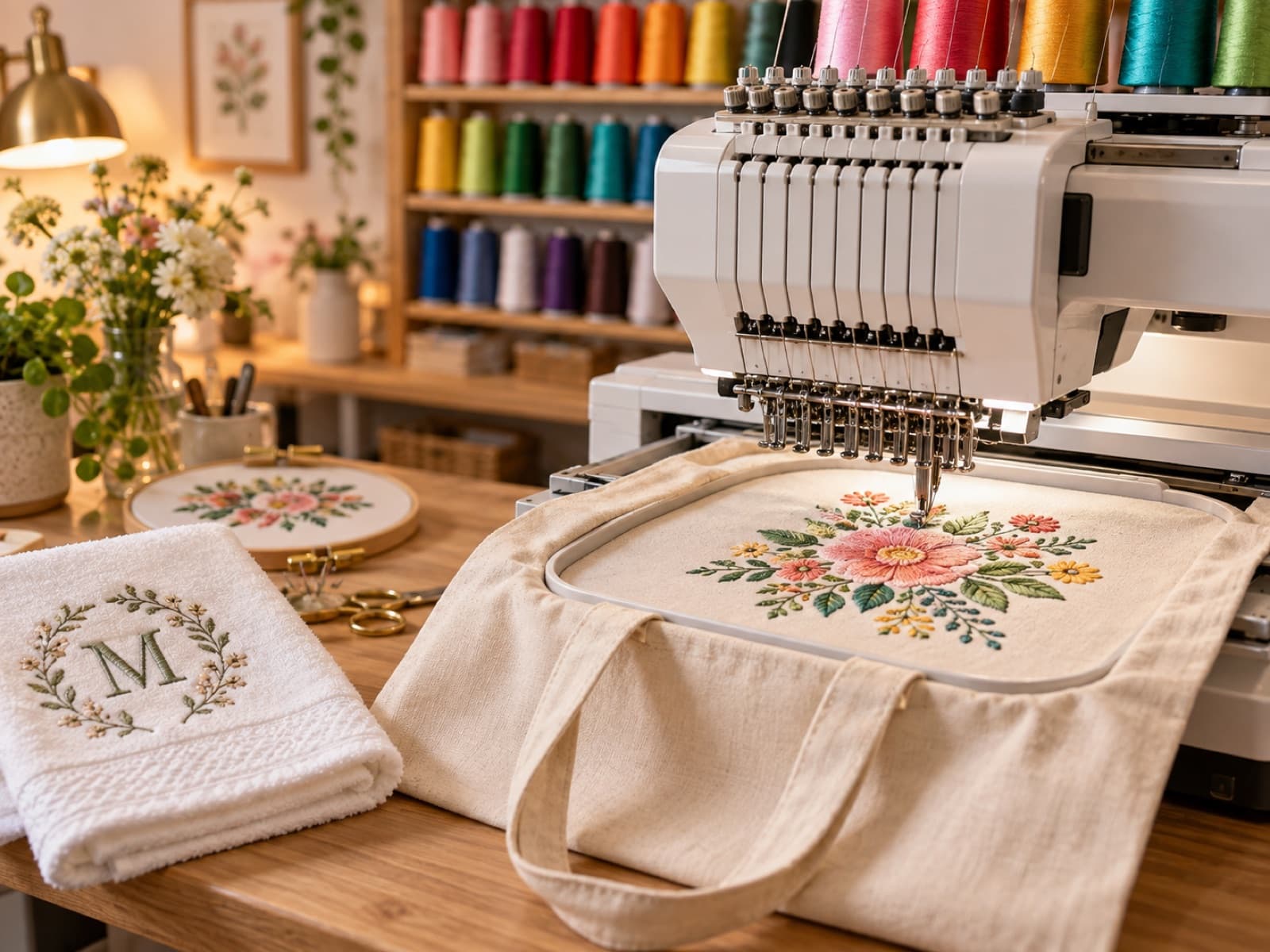
An embroidery machine stitching a colorful design onto a cap, threads in the rack.
Made by you.A precise design. A price with the setup included.

From making it to selling it

The machine finished. You are still working.

The customer sees a logo on a cap. You see the file that needed adjusting, the sample you stitched before approval, and the stack of blanks still waiting to be hooped. Then come the thread tails, backing to trim, and checks before packing. A stitch count describes the design. It does not describe your whole afternoon.

That distinction matters most on the order that looks easy: a handful of caps using a new logo. The run is short, but preparing the design still takes time. Give that work a place in the calculation before dividing it across the pieces you will actually deliver. A small order can be worth taking without pretending it has the economics of a large one.
01 / Follow the work behind the price

The costs are specific.
Your calculation should be, too.

Start with the parts of your process that are easiest to leave out. Give each one a place in the cost of your finished product.

01

A new logo is a job before it is a stitch

Digitizing, checking placement, and sewing a sample happen before production. Spreading those costs across an imagined reorder makes today's first order look cheaper than it is. The customer may return, but this batch needs its own honest numbers.

Put it in your calculation

Allocate the setup cost across the confirmed batch.

02

Every blank still needs your hands

Hooping a structured cap is different from positioning a flat towel. Trimming and packing also repeat for every piece. Machine speed cannot tell you how long those steps take, especially when the blank or placement changes.

Put it in your calculation

Time hooping, trimming, and handling separately from machine time.

03

Backing and test pieces leave the shelf too

Thread is visible in the finished design. Stabilizer, bobbins, and an unsuccessful sample are less visible, but you bought them. Backing choice depends on the fabric and application; one universal allowance will not describe every product.

Put it in your calculation

Record the consumables used by this design and blank.

02 / See what the price leaves you

One finished product.
The cost behind it.

This fictional embroidered cap costs $11.50 to make. It includes the blank, thread, stabilizer, machine time, handling labor and a share of digitizing across 24 caps. A different run size changes that setup share.

At $24.00, there’s $12.50 left.

That’s after the costs listed in this example. Any unlisted packaging, fees and other expenses still need to come out of it. Move the price to explore the difference.

Illustrative USD example. Your costs and selling price are yours to choose.

Anatomy of a price

Embroidered cap (8,500-stitch logo)

Example · USD
Blank cap
$4.20
Thread + stabilizer (by stitch count)
$0.95
Machine time (8,500 stitches)
$1.60
Digitizing (one-time, over a 24-cap run)
$1.25
Labor — hoop, trim, finish
$3.50
Cost in this example
$11.50
$24.00
$5.00Explore a selling price$36.00
Left after listed costs$12.50

52.1% margin
before other expenses

A fictional worked example, not a recommended price. Include any packaging, overhead, selling fees and applicable taxes not listed here before treating the remainder as profit. Changing the price doesn’t predict demand.

Make the next decision with the numbers visible

Price the run you have, not the reorder you hope for

In the illustrative cap calculation, digitizing contributes $1.25 per cap across 24 pieces: $30 for the job. Spread that same $30 across six caps and it becomes $5 each. Nothing happened to the thread price. The difference is simply how many pieces share the preparation.

Build that full cost in CrafterBy using your blank, consumables, time, and the setup share you calculate. Save a template for the next order. You can then revisit the quantity or design without relying on a price remembered from a very different batch.

Calculate my first product

03 / Put your costs somewhere useful

Know this product’s cost.
Keep it for the next order.

CrafterBy brings materials, active labor and equipment costs into a saved product. Explore the real app below.

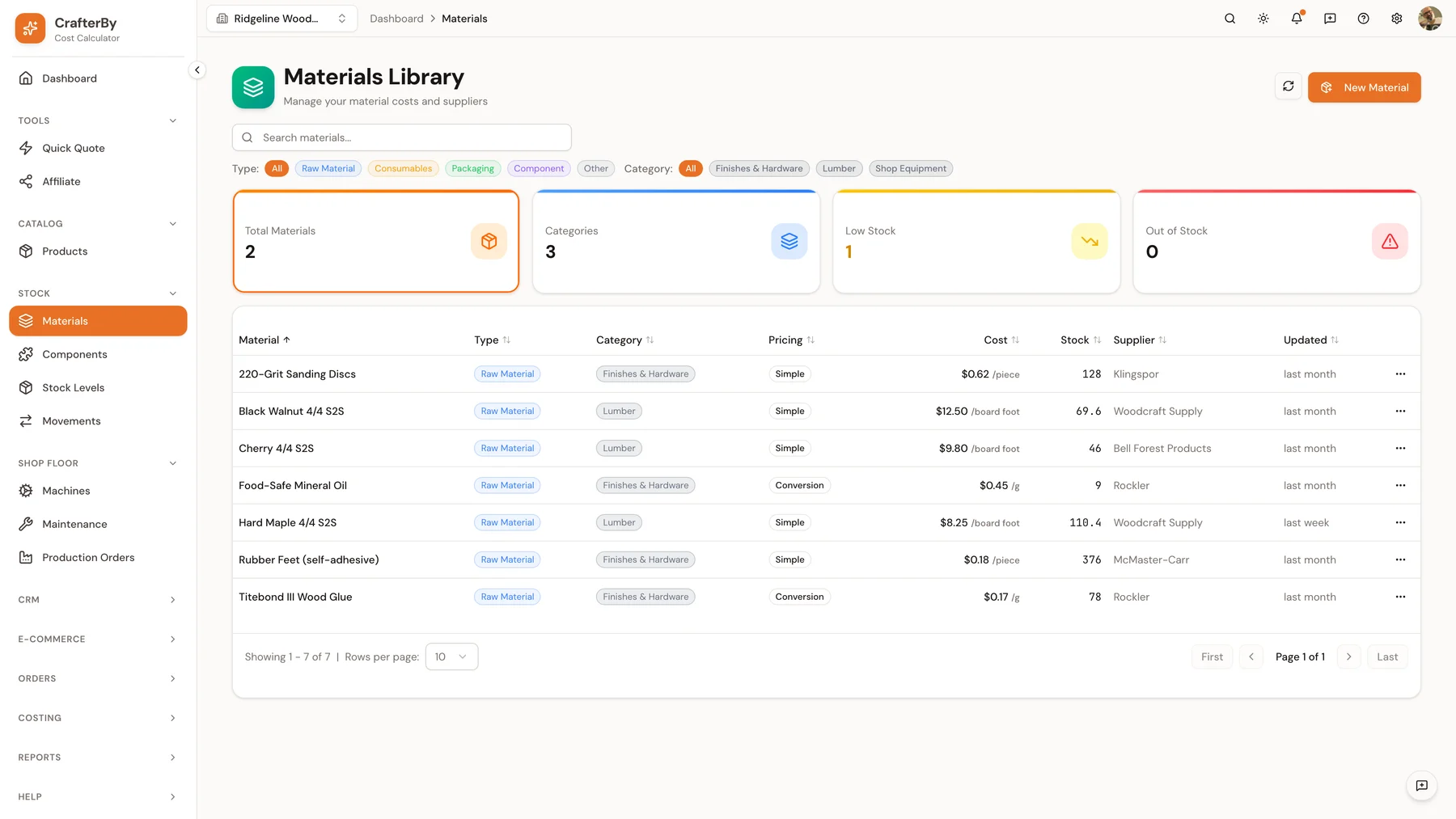
Keep embroidery thread, stabilizer, blanks and the other materials you use in one library. Record purchase prices and units, then use them in your product costs. Real app captures below contain sample woodworking data.

Inside CrafterBy / MaterialsActual app
CrafterBy’s Materials Library with unit prices, stock levels and suppliers in a sample woodworking account.

Your materials, organized · Real captures with sample woodworking data; your work uses the same tools.

View full size
Materials

Know what you paid and what you use.

Keep purchase prices, units and waste allowances with your materials. Buying a large pack and using a small amount should be part of the calculation, not another guess.

Product templates

Reuse the work behind the quote.

Save a familiar product’s materials and process as a starting point. Review the quantity, design and active time when the next order is different.

Cost & margin

Compare a price with the costs.

See what remains after the costs you entered. You choose the price; the breakdown helps you judge the work and the order before committing to it.

Before you make the next batch or quote

“I already have a price per thousand stitches.”

Keep it as a starting point. Then test whether it covers this blank, this setup, and this amount of handling. Two designs with the same stitch count can still need different preparation or finishing.

CrafterBy gives you somewhere to check the costs behind that familiar rule. It does not digitize artwork or promise a perfect run. You supply the working figures; the calculation helps you decide whether the price fits the job.

Your first step is small

Start with one product.
Build from what you know.

Take your last cap order. Enter the blank and backing, then add the minutes spent hooping and trimming one finished piece.

Create your free account, add the costs you know, then explore a selling price. Replace estimates with measured numbers as you learn from your own work.

Calculate my first product

Start free. See current plans and limits.

Before you start

Questions from your craft.
Answers you can use.

Does CrafterBy read my embroidery file?

This workflow uses quantities and times you enter. Take the design information from your embroidery software, check it against a sample run, and add it to the product calculation. Do not assume a stitch-file import.

Should a repeat logo carry digitizing again?

Only include work you expect to do. If the approved file is reusable without changes, remove that original preparation from the repeat calculation. Keep new sampling, placement changes, and handling where they apply.

What if the customer supplies the garments?

Separate supplied blanks from materials you buy. Your setup, consumables, machine time, and labor still have costs. Discuss responsibility for damaged garments before accepting the job; a calculator cannot set that agreement for you.

I’m only starting to sell. Is this for me?

Yes. You can begin with one product and the materials you already use. Take your last cap order. Enter the blank and backing, then add the minutes spent hooping and trimming one finished piece. You don’t need a team or a large catalog to start understanding your costs.

Is the money left after these costs all profit?

At a $24.00 selling price, $12.50 remains after the $11.50 of costs listed in this fictional example. Any packaging, overhead, selling fees, shipping you cover or applicable taxes not listed here can reduce that amount. Include your active labor as a cost too; it is separate from the margin left afterward.

Can I try it before choosing a paid plan?

Yes. Create an account and start free with one product. Check the pricing page for current plan features and limits. You can compare the process with your existing notes or spreadsheet before deciding what you need.

Your work deserves a price you understand

Make the product.
Know what it costs.

Start with your materials, your process and your time.
Give the next price a reason behind it.

Calculate my first product

Free to start · Your costs, your price, your decision